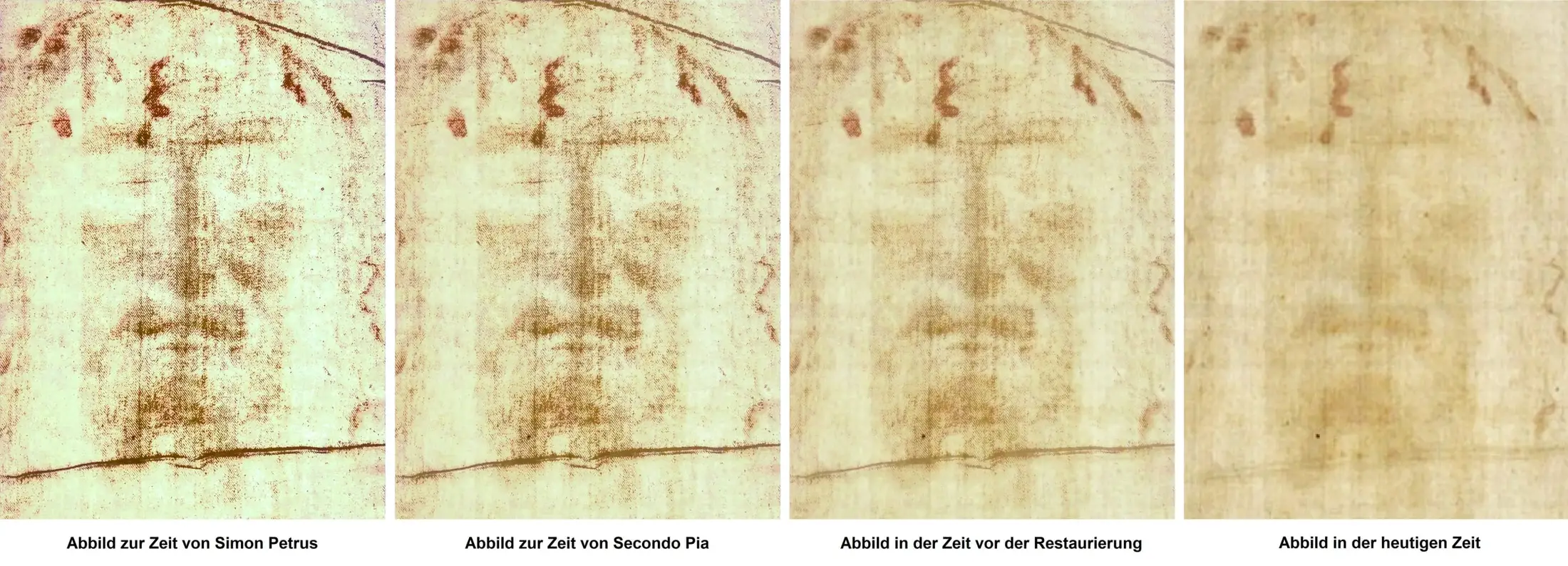
Before Lirey: the claimed history
Everything in this band is argued. None of it is corroborated by a document that names this cloth. It is given because the film's characters, and most books on the subject, refer to it, and because the reader should know what the claim is and what it rests on.
- First century
The Gospels say Joseph of Arimathea bought a linen cloth, a sindon in Mark's Greek, wrapped the body of Jesus in it, and laid it in a rock tomb. John adds a separate cloth that had been on the head, found "rolled up in a place by itself." No text from the first ten centuries describes an image on the burial cloth. Contested Bible
- The Image of Edessa
From the sixth century, Edessa (modern Urfa, Turkey) possessed a cloth bearing an image of the face of Christ, "not made by hands," the Mandylion, with a legend tying it to King Abgar. In 944 it was taken to Constantinople. Ian Wilson proposed in 1978 that the Mandylion was the Shroud folded so that only the face showed. A sermon attributed to Gregory Referendarius from 944 has been read by proponents as describing a side wound. Most Byzantinists reject the identification. Contested Guscin History
- 1192 to 1195The Pray Codex
A Hungarian manuscript in Budapest shows the entombment with a burial cloth marked by a herringbone pattern and four small holes in an L shape, which proponents match to the Shroud's weave and its poker holes. Critics read the drawing as a decorated sarcophagus lid. Contested History
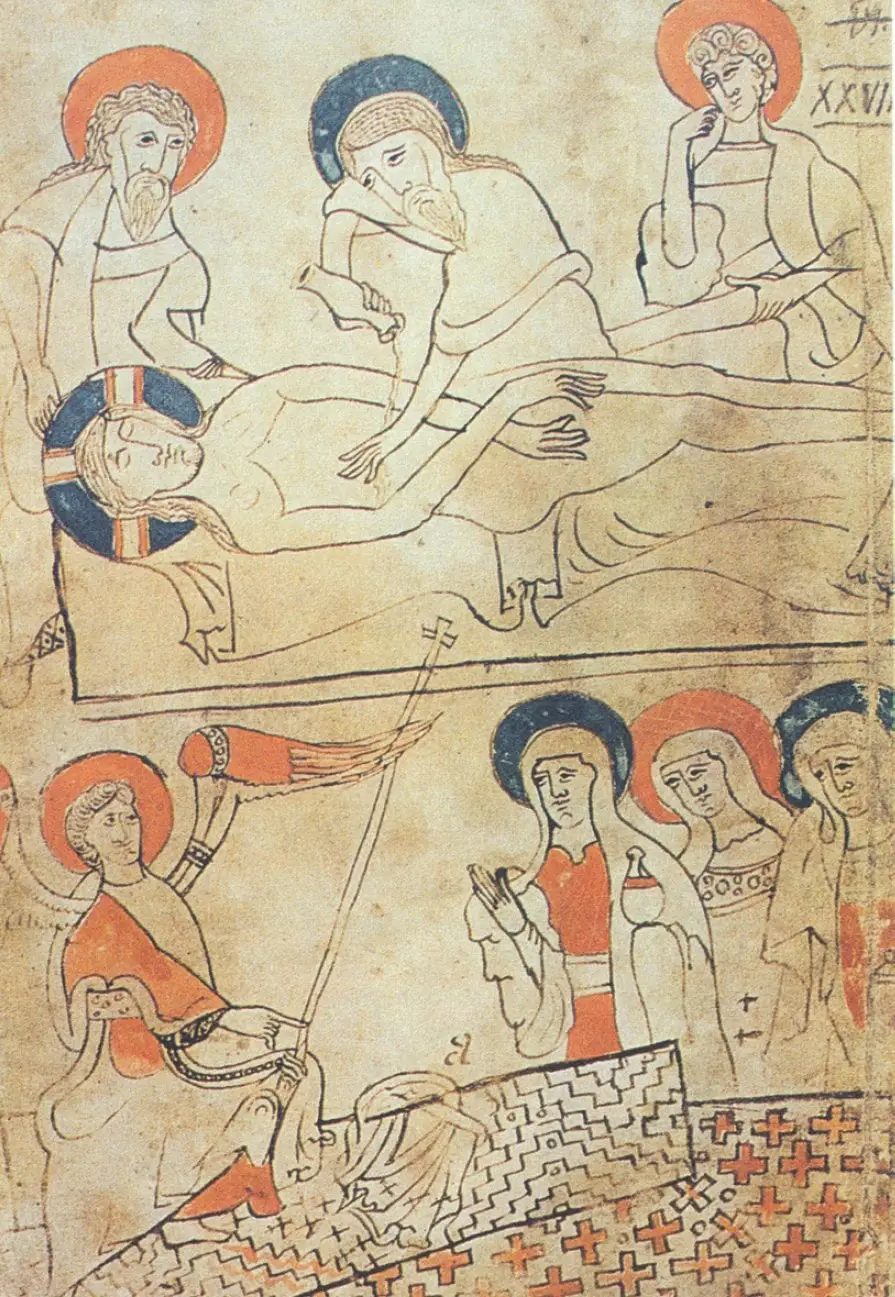
The Pray Codex, Budapest, about 1192 to 1195. The entombment above, the empty tomb below.Hungarian manuscript, about 1192, via Wikimedia Commons. Public domain. - 1204Constantinople
The crusader Robert de Clari wrote that a church in Constantinople kept "the sydoine in which Our Lord had been wrapped," shown every Friday, which "raised itself upright so that one could see the figure of Our Lord on it." After the sack of the city in April 1204 it disappeared. Whether "figure" means an image or a form is a translation question. About a hundred and fifty years pass before the next trace. Contested Dembowski
From Lirey: the documented history
- 1353 to 1357Lirey, France
Geoffroi de Charny, a knight, founds a collegiate church at Lirey, chartered 20 June 1353. The cloth is first exhibited there around 1355 to 1357 and draws pilgrims. A pewter pilgrim badge with the Charny and Vergy arms, now in the Musée de Cluny in Paris, shows the cloth held up by clergy with the double image on it. This is where verifiable history begins. Documented History
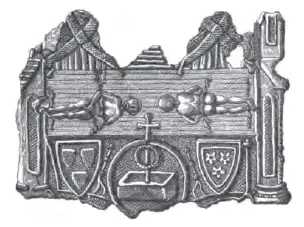
The Lirey pilgrim badge, drawn in 1865: two clerics hold up the cloth with its double image. The arms are Charny and Vergy.Arthur Forgeais, 1865, via Wikimedia Commons. Public domain. - About 1370Oresme
Nicole Oresme, philosopher and bishop, cites the Lirey shroud as an example of clerical fraud for donations. Discovered in 2025, this is the earliest known written mention of the cloth, and it is hostile. Documented Sarzeaud 2025
- 1389 to 1390The d'Arcis memorandum
Pierre d'Arcis, Bishop of Troyes, writes to the Avignon Pope Clement VII that a predecessor investigated the cloth about thirty-four years earlier and found that the artist "who had painted it" had confessed. The artist is not named, only an unsigned draft survives, and the bishop was in a dispute with Lirey over pilgrim revenue. The memorandum also describes the cloth as showing "the twofold image of one man, back and front," which is the earliest description of what is on it. In 1390 Clement VII ruled the cloth could be shown only as a "figure or representation" of the true shroud, with that announced aloud at each showing. The ruling was never formally reversed. The documents are genuine; their meaning is argued. Contested d'Arcis
- 1453
Margaret de Charny, the knight's granddaughter, conveys the cloth to Duke Louis of Savoy. The House of Savoy will own it for five hundred and thirty years. Documented History
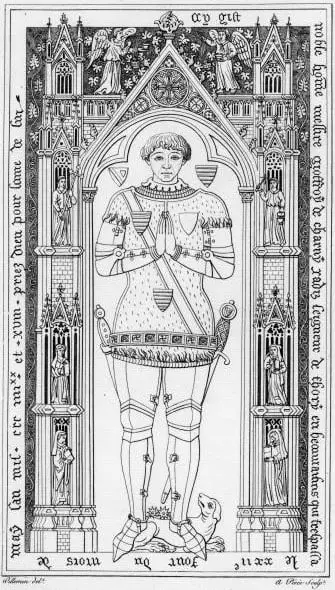
Geoffroi II de Charny, died 1398, son of the first known owner.Willemin, 1839, via Wikimedia Commons. Public domain. - 1502
Installed in the Sainte-Chapelle of the ducal castle at Chambéry. Documented History
- 1506
Pope Julius II approves a feast and liturgy of the Holy Shroud for 4 May. Documented History
- 1516
A painted copy made this year shows the poker holes but not the 1532 burns. Documented History
- 1532The fire
Night of 3 to 4 December. The Sainte-Chapelle at Chambéry burns. The reliquary melts and a drop of silver burns through the folded cloth. Water leaves the diamond stains. Documented Poor Clares
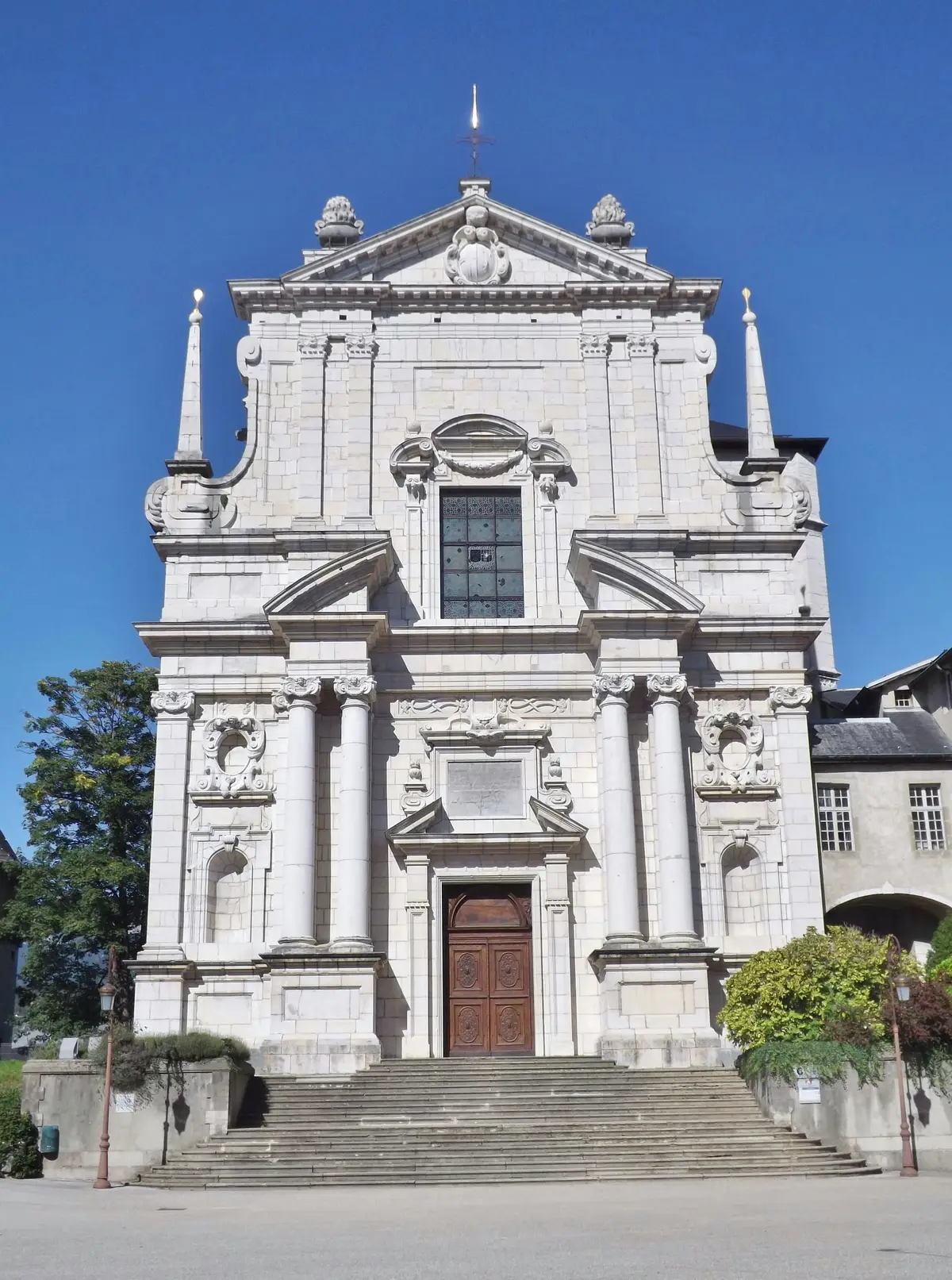
The Sainte-Chapelle at Chambéry, where the cloth was kept from 1502 and where the fire of 1532 broke out.Florian Pepellin, 2015, via Wikimedia Commons. CC BY-SA 3.0. - 1534The repair
16 April to 2 May. The Poor Clares of Chambéry sew the triangular patches and the Holland backing. Their written report survives. Documented Poor Clares
- 1535 to 1561
Moved for safety during the wars, including about twenty years at Vercelli (1537 to about 1561), with showings elsewhere. Documented History
- 1578
Brought to Turin so that Saint Charles Borromeo could venerate it without crossing the Alps. It has stayed in Turin since. Documented History
- 1694
The Chapel of the Holy Shroud, designed by Guarino Guarini, is completed between the cathedral and the Royal Palace, and the cloth is installed in it. Documented History
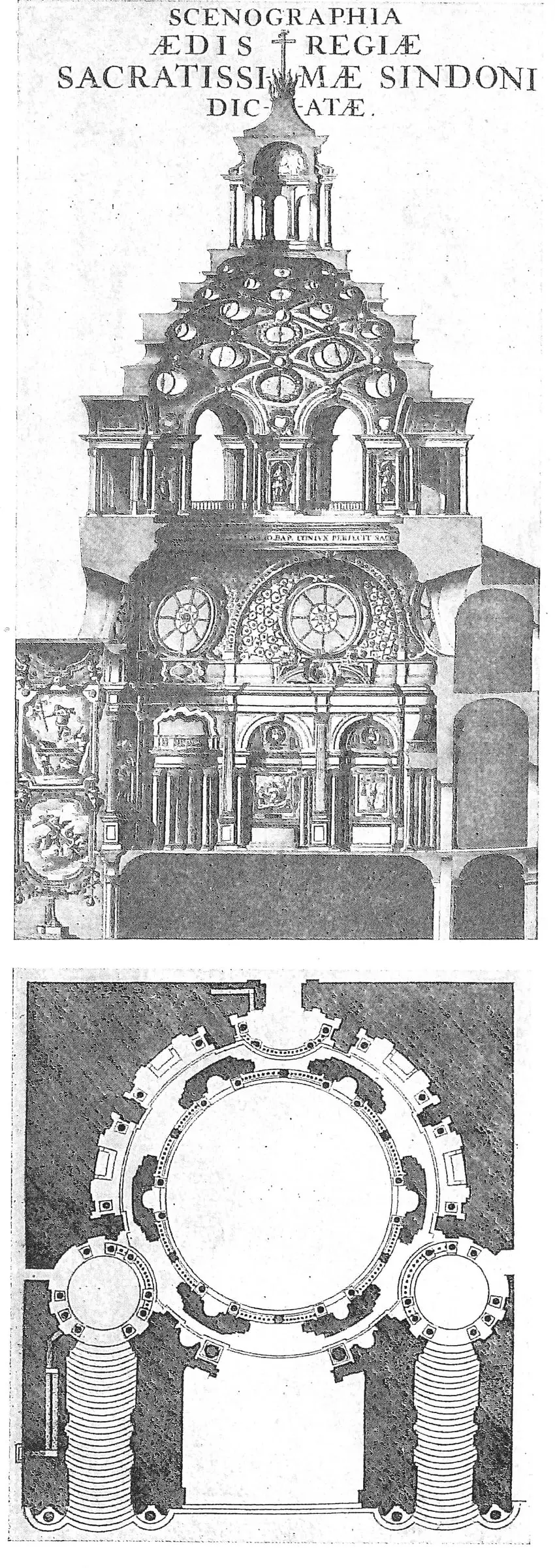
Guarini’s own plate of the chapel, 1682. It was completed in 1694.Guarino Guarini, 1682, via Wikimedia Commons. Public domain. - 1898The negative
25 May, Secondo Pia's first attempt fails. 28 May, he photographs the cloth during an exposition for the four-hundredth anniversary of the cathedral and finds the face on the negative that night. Documented Pia
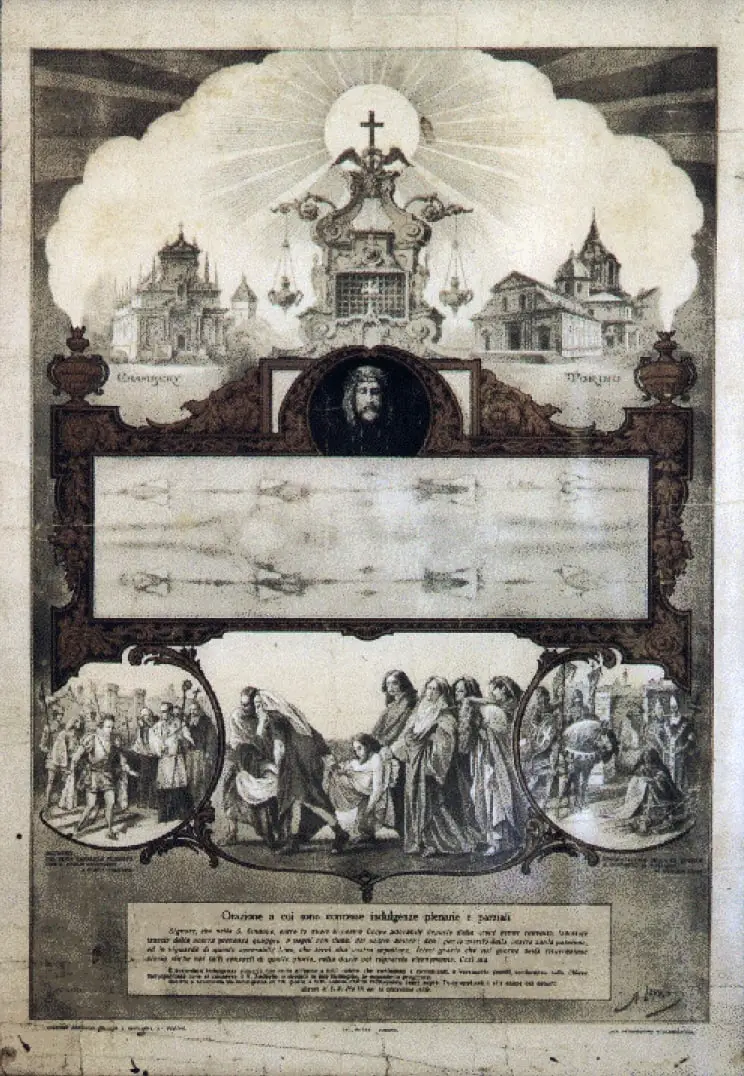
Poster for the 1898 exposition, during which Pia made his photographs.Turin, 1898, via Wikimedia Commons. Public domain. - 1899 to 1903
The historian Ulysse Chevalier publishes the d'Arcis memorandum and the medieval documents and argues the cloth is a fourteenth-century painting. The Jesuit Herbert Thurston agrees in the Catholic press. Documented History
- 1902
Yves Delage, agnostic professor of zoology at the Sorbonne, tells the Académie des Sciences the image is anatomically the body of a crucified man and not a painting. The Académie refuses to publish the paper. Paul Vignon proposes the vapor theory of image formation. Documented History
- 1931Enrie
Giuseppe Enrie rephotographs the cloth, confirming Pia. Documented Chronology
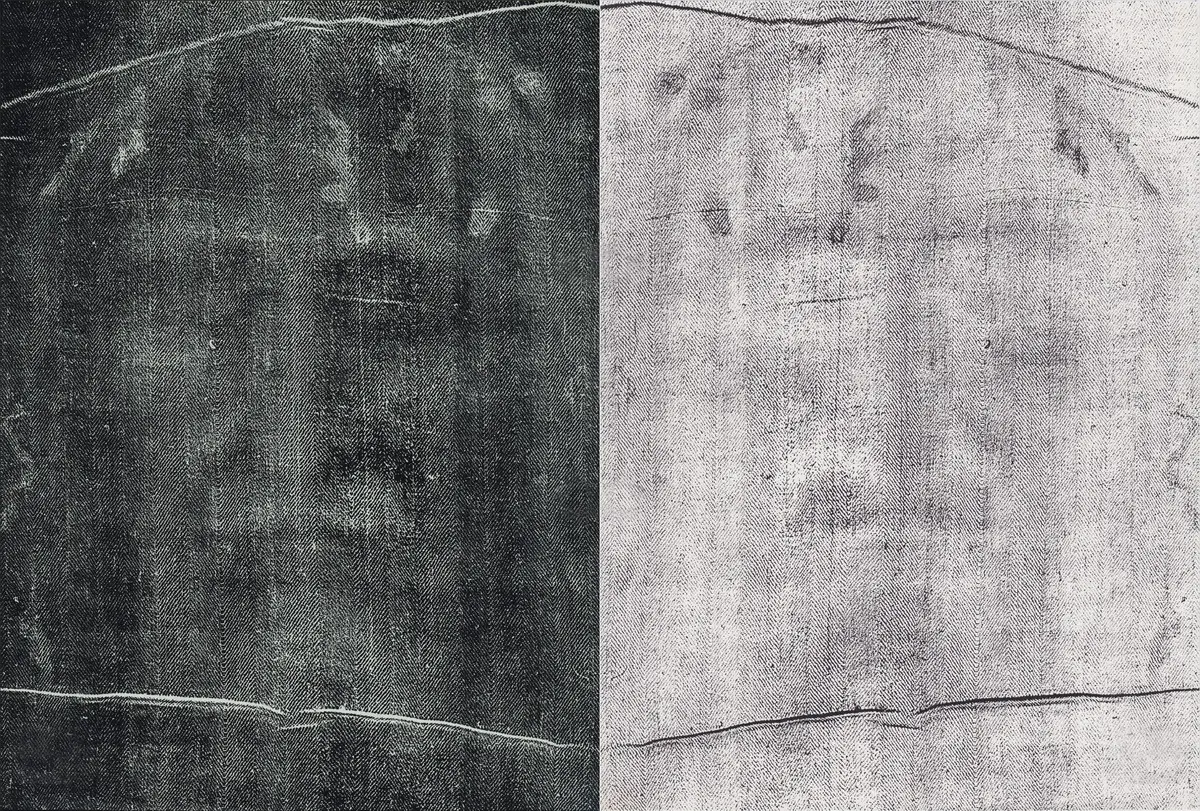
Enrie’s plate and print, 1931. The same reversal Pia had found.Giuseppe Enrie, 1931; 2022 pairing by Rudolf Berwanger, via Wikimedia Commons. CC BY-SA 4.0. - 1933
Exposition for the Holy Year. Documented History
- 1939 to 1946
Hidden at the Benedictine abbey of Montevergine, near Avellino, for the war. Documented CNA Montevergine
- 1955Josie Woollam
A ten-year-old English girl near death with osteomyelitis is brought to Turin by Group Captain Leonard Cheshire VC and allowed to put her hand inside the silk. See her page. Documented Foley
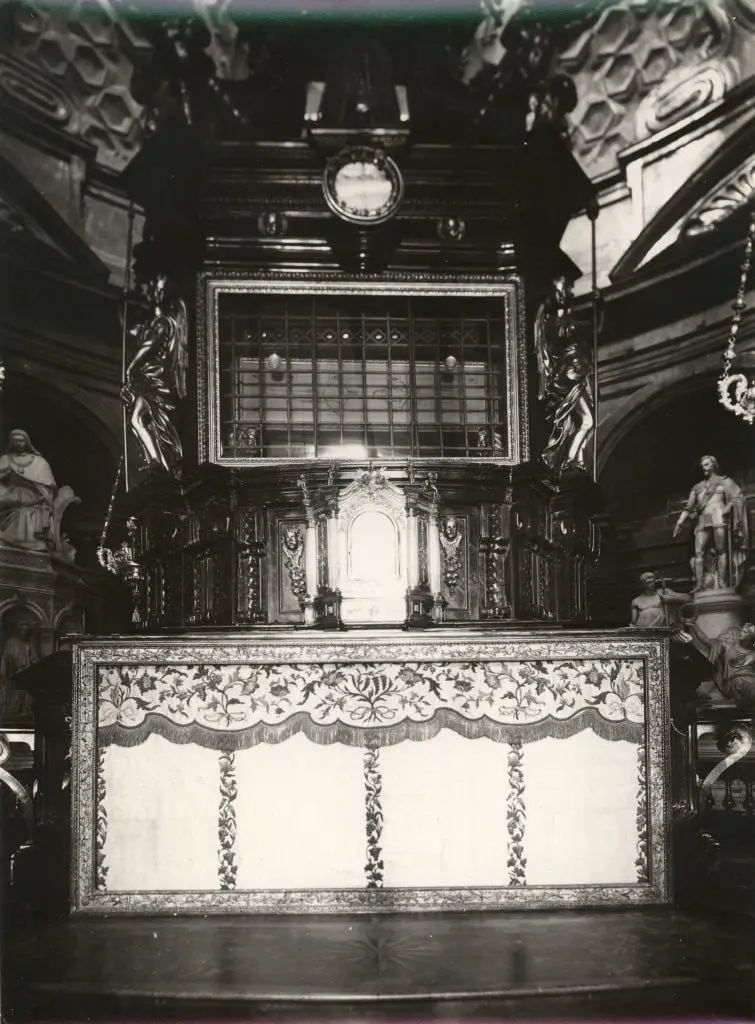
The altar of the Chapel of the Holy Shroud, about 1928, where the cloth was kept until 1993 and where Josie Woollam was brought in 1955.Mario Gabinio, about 1928. Fondazione Torino Musei, via Wikimedia Commons. CC BY 3.0 IT. - 1969
A secret inspection by a commission appointed by Cardinal Michele Pellegrino. Documented Chronology
- 1973
23 November, first television exposition, introduced by Paul VI. 24 November, Gilbert Raes takes thread samples and Max Frei takes his first tape samples. The commission's blood tests are negative. Documented Chronology Kearse
- 1976The VP-8
19 February, Albuquerque. Jackson and Jumper see the three-dimensional relief. Documented Chronology
- 1977
March, the Albuquerque conference. STURP is formed. Documented Albuquerque 1977
- 1978The examination
Late August to 8 October, public exposition, more than three million visitors. 1 September, Cardinal Wojtyła visits as a pilgrim. 28 September, John Paul I dies. 30 September to 5 October, customs holds the eighty crates. Night of 8 October to evening of 13 October, the examination. 14 October, the cloth returns to its casket; the conclave is sealed. 16 October, Wojtyła is elected John Paul II. Documented Chronology Conclave 1978
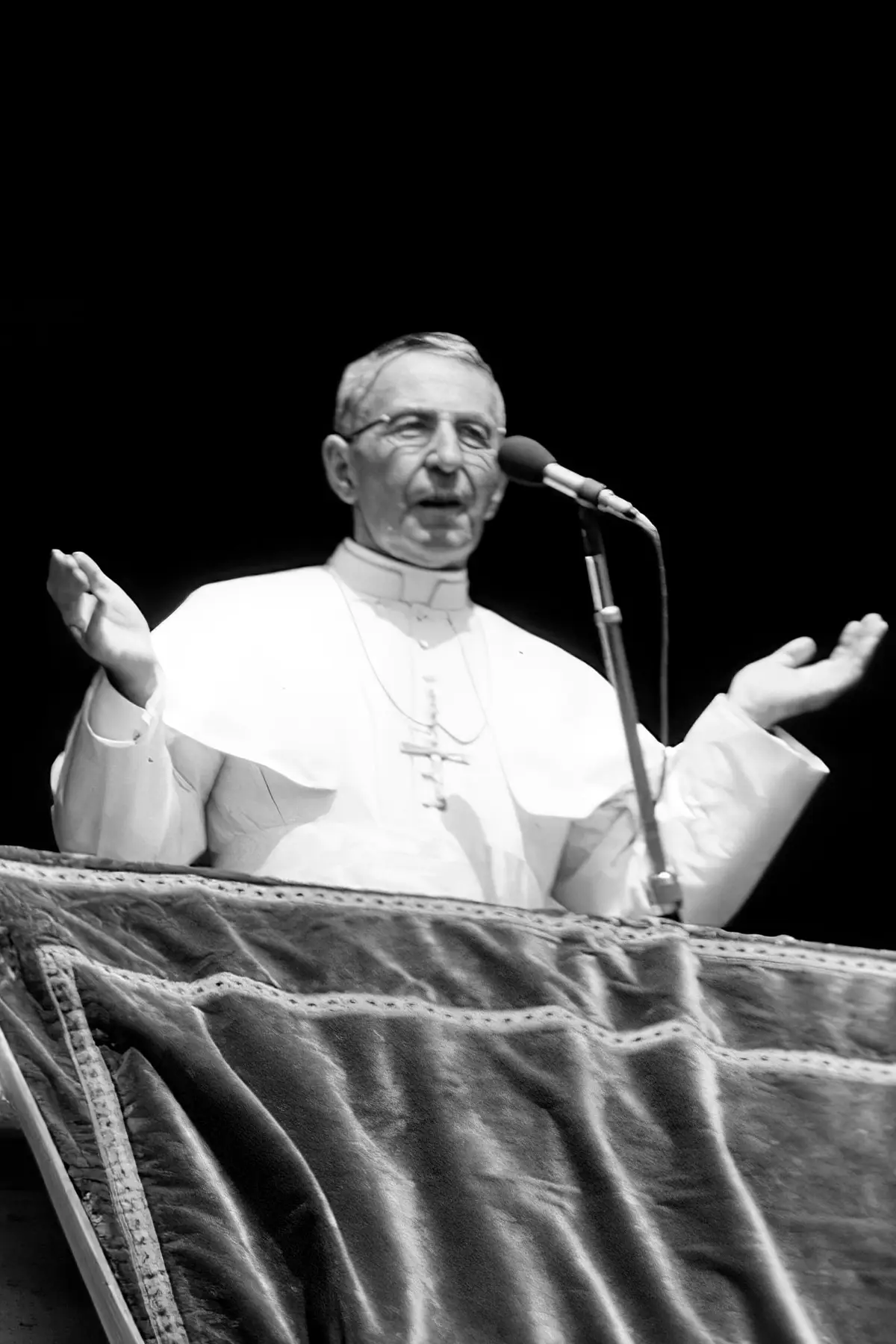
John Paul I, in the thirty-three days of his papacy, autumn 1978.Sentinelle del mattino International, 1978, via Wikimedia Commons. CC BY-SA 2.0. - 1979 to 1980McCrone
Walter McCrone reports iron oxide and vermilion on the tapes and calls the cloth a painting. Claimed McCrone
- 1981The verdict
October, New London, Connecticut. The project releases its summary: no pigments, not the product of an artist, no known method, a mystery. Documented STURP 1981
- 1983
18 March, Umberto II dies. His will leaves the Shroud to the Pope, on condition it stay in Turin. The Holy See becomes the owner. Documented Chronology
- 1983
Max Frei authenticates the forged Hitler diaries, then dies. Documented Frei bio
- 1988The date
21 April, Riggi cuts a strip from one corner; it is divided among laboratories at Arizona, Oxford and Zurich. 13 October, Cardinal Ballestrero announces the result in Turin: AD 1260 to 1390, with at least 95 percent confidence. 16 February 1989, published in Nature. Documented Nature 1989 SSI 1988
- 1997The fire
11 April, night. Fire in the Guarini Chapel, then under restoration. A fireman, Mario Trematore, breaks the bulletproof case with a sledgehammer and carries the casket out. The cloth is undamaged. The cause is never conclusively established. The chapel is closed for twenty-one years. Documented Fire 1997
- 1998
Exposition for the centenary of Pia's photograph. 24 May, John Paul II in Turin: "Since it is not a matter of faith, the Church has no specific competence to pronounce on these questions," and the Shroud is "a mirror of the Gospel." Documented JP II 1998
- 2000
Exposition for the Jubilee. Documented Chronology
- 2002The restoration
June and July. Mechthild Flury-Lemberg's team removes the 1534 patches and the Holland backing, trims the charred edges, and attaches a new backing. Criticized by many researchers for the loss of evidence and the lack of consultation. Contested Conservation
- 2005Rogers
20 January, Raymond Rogers publishes in Thermochimica Acta that the radiocarbon corner differs chemically from the main cloth and is likely a repair. 8 March, he dies. Claimed Rogers 2005
- 2008
The cloth is photographed at very high resolution (the HAL9000 image, about 12 billion pixels). Documented Chronology
- 2009
Luigi Garlaschelli's full-size reproduction by bas-relief and acid. Claimed Garlaschelli
- 2010
Exposition, about 2.1 million visitors. 2 May, Benedict XVI: "an icon written in blood." Documented Benedict 2010
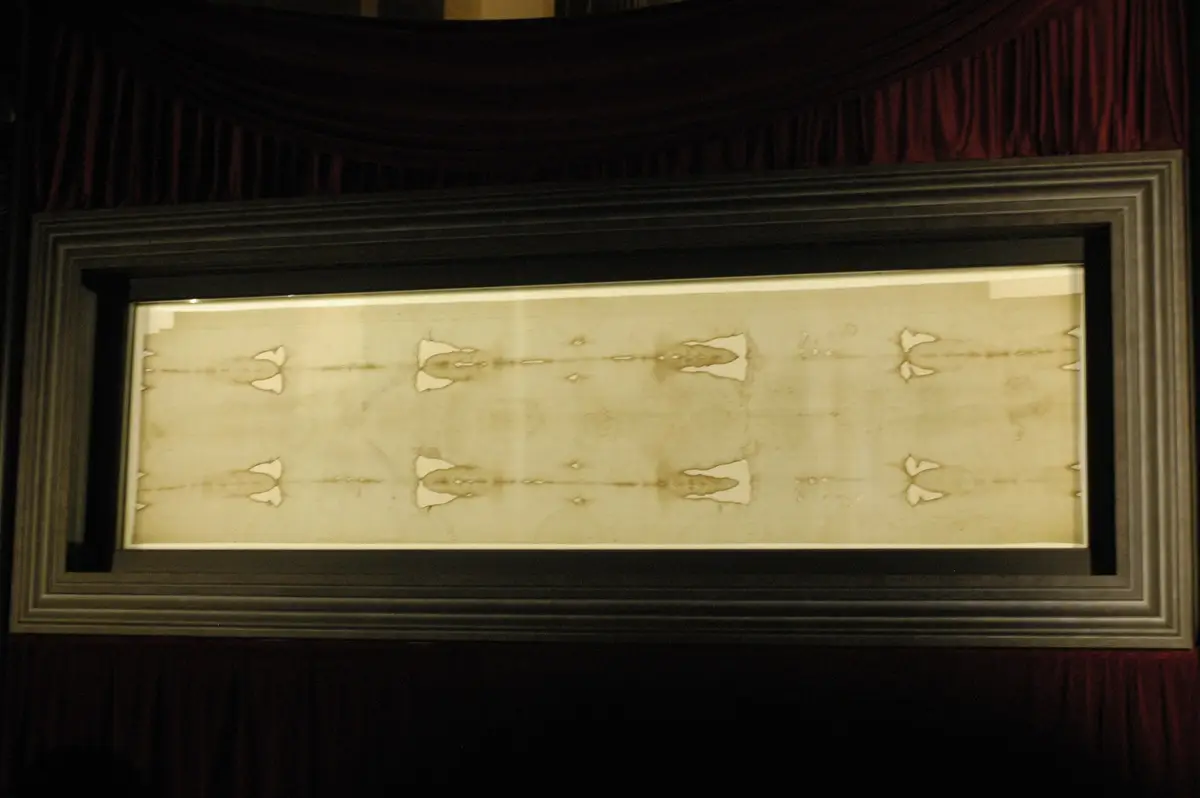
The exposition of 2010.Fabio Poggi, 22 May 2010, via Wikimedia Commons. CC BY 3.0. - 2010
Arizona re-examines a leftover piece of its 1988 sample and reports ordinary Shroud linen, no dye, no patch. Claimed Arizona 2010
- 2011
ENEA Frascati publishes its ultraviolet laser coloration results. Documented ENEA
- 2013
Holy Saturday, television-only exposition. Giulio Fanti publishes alternative dating methods giving a wide ancient range. Claimed Chronology
- 2015
Exposition, more than two million visitors. 21 June, Francis: "an icon of love." The DNA study of dust and fibers from the 1978 tapes is published. Documented Barcaccia 2015
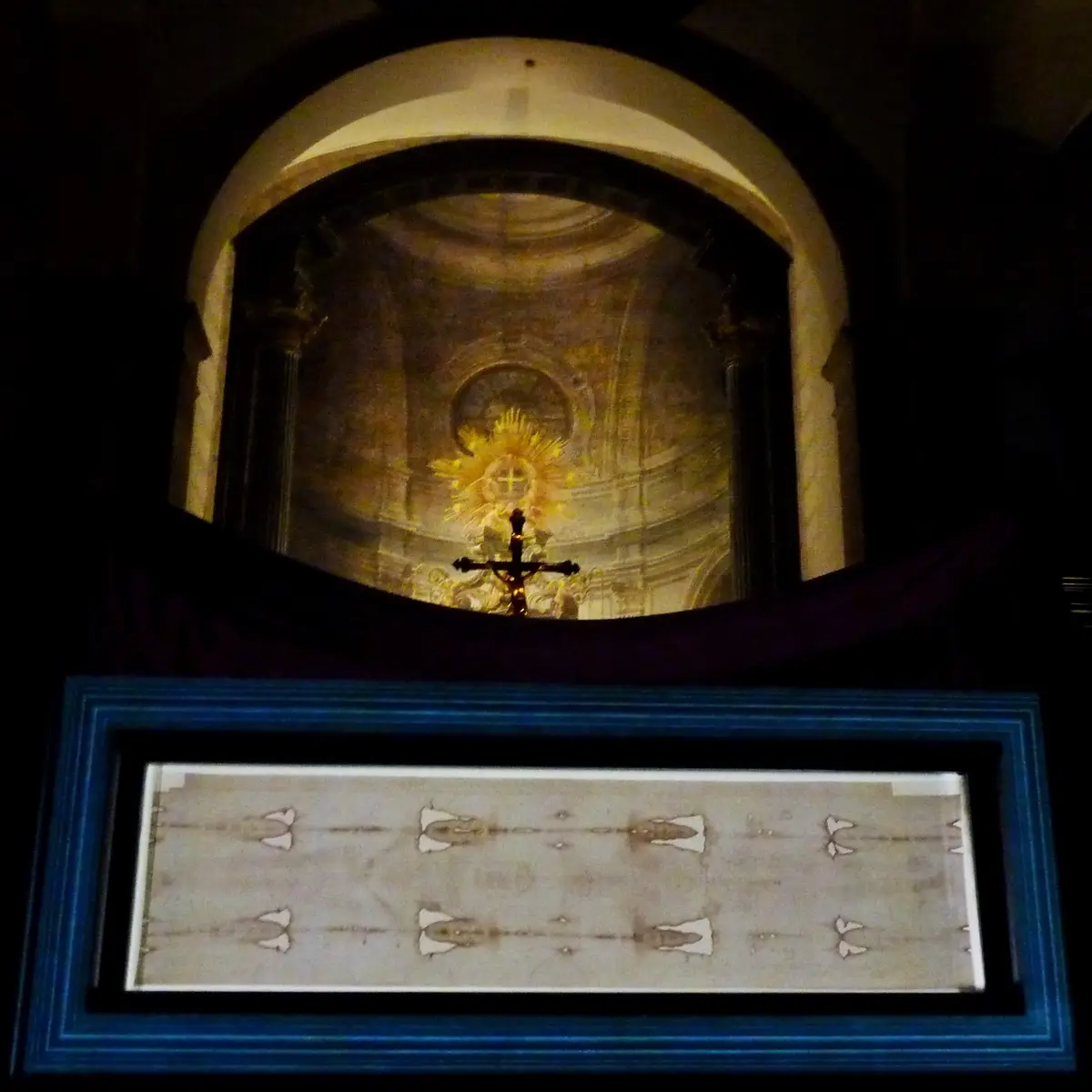
The exposition of 2015, the last time the cloth was shown.Justinawind, 22 June 2015, via Wikimedia Commons. CC BY-SA 4.0. - 2018
27 September, the Guarini Chapel reopens after twenty-one years of restoration. The bloodstain-pattern challenge is published. Documented Fire 1997 Borrini and Garlaschelli
- 2019
Casabianca and colleagues publish an analysis of the raw 1988 data, obtained by freedom-of-information request, showing more variation between laboratories than the Nature paper reported. Claimed Casabianca 2019
- 2020
Holy Saturday, a livestreamed exposition during the pandemic lockdown. Documented Chronology
- 2022
Liberato De Caro and colleagues publish a wide-angle X-ray scattering measurement they say is compatible with a cloth about two thousand years old, if it was kept within narrow temperature and humidity bands for thirteen centuries. Radiocarbon specialists say the method is not an established dating method. Claimed De Caro 2022
- 2024
Barrie Schwortz dies, June. Documented Schwortz memoriam
- 2025
The Jubilee year passes without a physical exposition; a digital full-size exhibit is shown in Piazza Castello. The Oresme document is published. Cícero Moraes publishes a three-dimensional modelling study arguing the image fits a low relief better than a wrapped body; it is challenged in 2026. Documented Sarzeaud 2025 Vatican News 2026
- Today
The Shroud lies flat in a sealed case in the Cathedral of Saint John the Baptist, Turin. It has not been shown in public since 2015. It has not been tested since 1988.
Last checked 2026-10-20.