The rule the film set itself
SINDON: The Shroud of Turin is a drama, not a documentary. It puts five scientists in one room with the cloth for five days and tells a story. The film's rule, stated on its own closing card, is that the examination was real, the findings are drawn from the record, the characters are composites, and the devices that hold the story together, the sealed room, the one page, the press conference, the man on the roof, are the film's own.
This page is the long version of that card.
The people
| In the film | In the record |
|---|---|
| Doctor Elias Thorne, a chemist from Los Alamos who runs the room, a widower, a skeptic. Film | A composite. The real team had a chemist from Los Alamos, Raymond Rogers, who was its enforcer of skepticism and later reversed himself on the dating sample. Its physics came from John Jackson. Its outsider's arc from unbelief to "my antenna is up" belongs to several members, including Barrie Schwortz and John Heller. Elias's wife, his grief and his ring are invented. Rogers wiki Heller obit Schwortz memoriam |
| Doctor Sophia Parenti, Italian textile historian, Catholic, keeper of the ledger. Film | Invented. No textile historian was on the 1978 team, and no woman was in the room in that role. She draws on Gilbert Raes (the 1973 textile sampling), on Mechthild Flury-Lemberg's later textile work, on the Italian forensic tradition of Baima Bollone, and on the Poor Clares of 1534, whose report is the first close description of the cloth in the record. Her archive is the film's version of the real tape-sample archive that made the chemistry of 1980 to 2005 possible. Raes Poor Clares Rogers 2005 |
| Professor Anton Brunner, Swiss criminologist, Jewish, pollen specialist, with a book deal. Film | Draws on Max Frei-Sulzer, the Zurich criminalist who took pollen samples in 1973 and 1978 by tape lift, and whose findings were later discredited by his authentication of the Hitler diaries. The real Frei read his pollen toward the Near East, not medieval France. The book deal, the wager, the kitchen tape and the red ochre are the film's; the red ochre finding belongs to Walter McCrone, who was never in Turin. Frei Frei bio McCrone |
| Sebastian Reed, Air Force photographer, former prisoner of war. Film | Draws on the Air Force members of the team (Jackson, Jumper), on the photographers (Vernon Miller, Barrie Schwortz), and on Pete Schumacher, who built the VP-8. No member of the 1978 team is recorded as a Vietnam prisoner of war. His years in Hoa Lo are invented. Roster Schumacher |
| Father Benicio Alvarez, Colombian priest, former pathologist, the Archbishop's representative inside the room. Film | Invented. Draws on Robert Bucklin, the team's forensic pathologist, who wrote the "autopsy" of the man of the Shroud; on Father Peter Rinaldi, the Salesian who was the Church's diplomat to Shroud research; on Monsignor José Cottino, the Archbishop's observer, who was in the room. The Vatican medical board he sits on is modelled on the Consulta Medica of the Congregation for the Causes of Saints, which existed in 1978. His tremor, his sister and his Bogotá years are the film's. Bucklin Rinaldi Chronology |
| Don Blackwood, the project leader who stays outside. Film | Draws on Tom D'Muhala, STURP's president, and on the organizing role of Jackson and Jumper. D'Muhala |
| Sister Benedetta Frances, who holds the seal and brings the food. Film | Invented. The palace's religious custodians are real. She also carries, in her own mouth, the true story of Josie Woollam, which she tells as an eyewitness. Whether any particular nun saw both 1955 and 1978 is not known. Foley |
| The Monsignor, who carries the cloth in and warns "guard it with your life." Film | Monsignor Cottino and Monsignor Baldi did carry the cloth and lay it on the table. The words are invented. Chronology |
| Ruth, and Alison, Elias's late wife. Film | Invented. |
The room
| In the film | In the record |
|---|---|
| Five scientists sealed in with wax for 120 hours. Nobody else in or out but one nun at nine each morning. Film | About two dozen scientists and technicians worked in shifts around the clock for about 120 hours. People came and went. Nobody was sealed in. The 120-hour figure is real. Chronology STURP exam page |
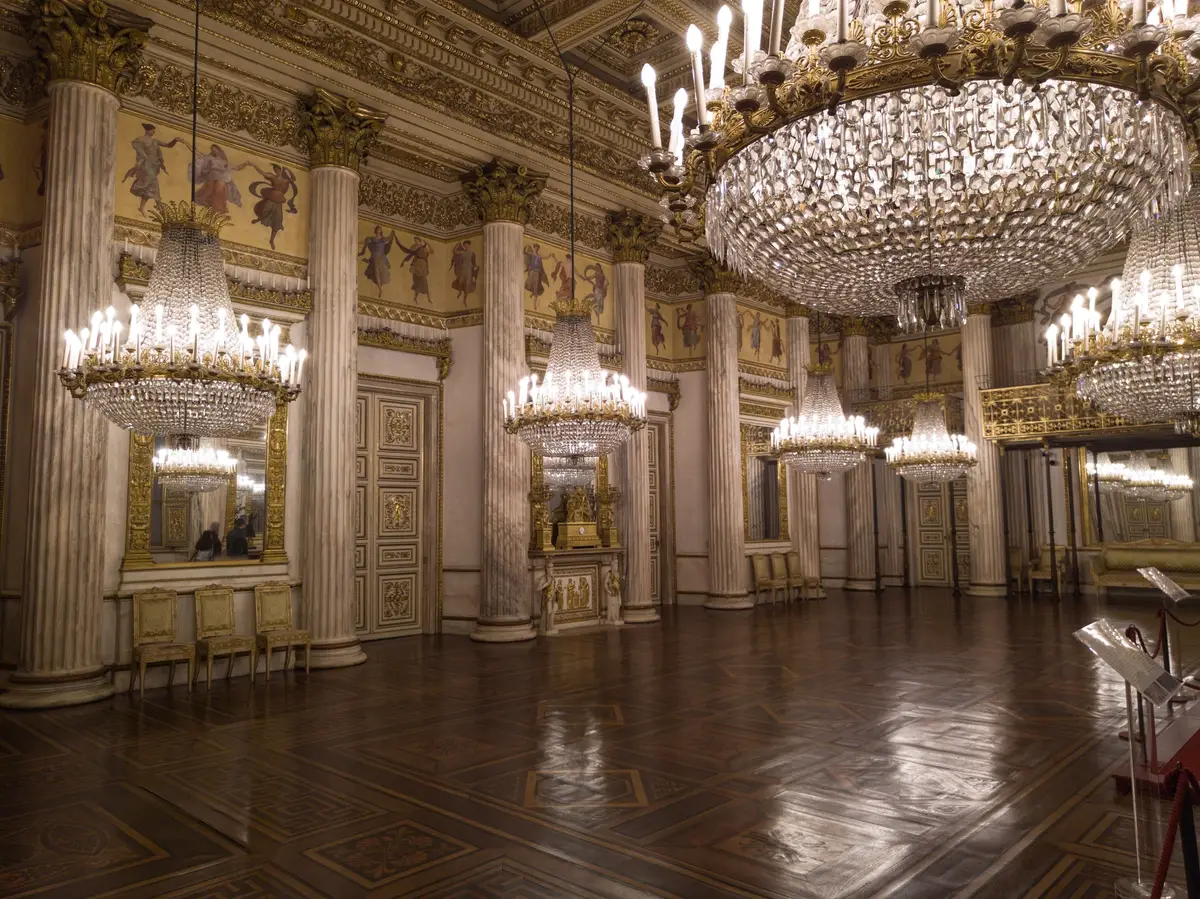
| A gallery in the Royal Palace under a ceiling fresco, foil on the windows. | The Hall of Visiting Princes in the Royal Palace, next to the cathedral, with the windows covered. Documented Schwortz 1978 |
| A stainless steel table that tilts upright, the cloth held by magnets, a camera rail. | Exactly as built, by Don Devan. Documented Schwortz 1978 |
| Eighty crates of equipment. | Eighty, held by customs for five days over a radiation label. Documented Chronology |
| The chalkboard: HOW WAS IT DONE? with eight suspects struck off. Film | Invented. The team's method was to test the image against every category of known mechanism, which is what the board dramatizes. The eight categories are real categories of theory. STURP 1981 |
| Hour supers from 1 to 120. Film | Invented. |
| One typed page, five signatures, a press conference in Turin on the fifth day. Film | Invented. No findings were announced in Turin in 1978. The project's one-page summary was released at a press conference in New London, Connecticut, in October 1981. STURP 1981 |
| The words Elias reads at the press conference. | Taken from the 1981 summary, reordered, with one sentence cut short. The only substantive addition, "We have not established the age of the cloth," is true: the 1978 work dated nothing. Documented STURP 1981 |
| A letter declining carbon dating on conservation grounds. | True in substance. Harry Gove of the University of Rochester asked Turin for threads in 1978 and was refused; the examination was non-destructive by condition. The typed page is the film's. Documented Gove |
| Police on the roof. A man with a gas can on the last night. Film | The 1972 arsonist is real: on the night of 30 September to 1 October 1972 a man came over the roofs, forced a window and set fire to the altar cloths of the chapel; an asbestos slab in the casket saved the cloth; he was arrested on 30 December 1972. The attempt on the last night of the examination is the film's. Arson |
| A power cut on the third night. Film | Invented. |
| A Mass said in the room. Film | Invented. |
The science in the room
| In the film | In the record |
|---|---|
| No pigment found on the image; color on the top fibers only. | True, published 1980 to 1981 from the 1978 tapes. Documented Heller and Adler |
| The blood tested as blood, with serum halos and bilirubin. | Serum halos were seen in the 1978 ultraviolet photographs. The blood chemistry and the bilirubin were found afterward, on the tapes, and published 1980 to 1986. Whether it is human blood is still argued. The film puts the chemistry inside the five days. The film moves this inside the five days. Documented Miller and Pellicori Heller and Adler Kearse |
| The scorch test: a soldering-iron scorch glows under ultraviolet and the image does not. | Done by Miller and Pellicori, exactly as shown. Documented Miller and Pellicori |
| The contact test on a volunteer's face: a smeared "pancake." | The team did contact experiments on volunteers and found contact "totally incapable of explaining the image of the face." Documented Jumper and Mottern |
| Cotton found in one corner; the Poor Clare patches are linen. | The cotton is Raes, 1973. The 1534 backing is confirmed linen; what the patches themselves were made of has not been verified, and they were removed in 2002. Documented Raes Poor Clares |
| The VP-8 run in the room on the team's own photographs. Film | The VP-8 result was obtained in 1976 at Sandia on Enrie's 1931 photographs. No source puts a VP-8 in Turin in 1978. The film's dialogue credits the 1976 discovery and then stages a confirmation inside the room. Chronology Schumacher |
| A rubbing from a plaster relief rises "flat on top" in the VP-8. Film | Whether relief rubbings produce a Shroud-like VP-8 result is argued between Nickell and Jackson. The film's quick rubbing is not Nickell's method. Nickell |
| Red ochre on the fingers, fourteen grains, logged. The count at dawn: as many on bare cloth, a hundred times more at the water stains. | The finding is McCrone's (1979 to 1980), and the rebuttal, iron from the retting water pushed to the water-stain margins, is Heller and Adler's. Both happened after 1978, in laboratories, not in Turin. The film moves both inside the five days. Documented McCrone Heller and Adler |
| Gundelia tournefortii, the Passover thistle, found and then excluded because the sample was taken wrong. Film | Frei did list Gundelia. The exclusion is the film's, and it is the position careful researchers take about all of Frei's pollen. Frei |
| No image under the blood, shown by an enzyme dissolving a clot. | The enzyme test was done by Heller and Adler after 1978. The film moves it inside the five days. Documented Heller and Adler |
| "Not one torn clot." No decay. | The absence of decay products is documented. The clean-clot inference is made by some authenticity writers and is not among the project's findings. Contested Meacham |
| The wrist wound, the missing thumbs, the median nerve. | Pierre Barbet's theory from the 1930s, disputed by Frederick Zugibe. The film has a character call it "one surgeon's theory." Contested Barbet Zugibe |
| Sophia's X-ray iron map: the face reads the same as the cloth beside it. | The 1978 X-ray fluorescence survey found no difference in iron between image and non-image areas, and more iron in the blood. Its authors said the method could not rule out very thin pigment. Documented XRF 1980 |
| Brunner's identification: scourging, cap of thorns, lance, legs unbroken, wrists, rich man's linen. | The forensic reading of the image, from Barbet and Bucklin. Claimed Bucklin |
| The 1389 bishop who "never named him," and the shroud of Cadouin that "wore a caliph's name in Arabic for eight hundred years." | Both real. The bishop never named the artist. The Cadouin cloth is first recorded in 1214 and its band was read in 1934, so seven centuries, not eight. d'Arcis Cadouin |
| "Either the most awesome relic of Jesus Christ in existence, or one of the most ingenious products of the human mind and hand on record. There is no middle ground." | John Walsh, 1963, nearly verbatim. Documented Walsh |
Outside the room
| In the film | In the record |
|---|---|
| No pope that week; the last one died after thirty-three days. | True. John Paul I died 28 September 1978. The conclave opened 14 October. Documented Conclave 1978 |
| John Paul II elected three days after the examination ended, having come to Turin as a pilgrim that September. | True. Elected 16 October 1978; visited the Shroud 1 September 1978. Documented JP II 1980 |
| Three million pilgrims that summer. | More than three million, late August to 8 October 1978. Documented Sindone 1978 |
| Three hundred accredited journalists and a television tower. Film | The scale of the press is the film's. |
| The archive case sealed and dated 13 October 1978. | The examination ended on the evening of Friday 13 October. Documented Chronology |
| The Sister's story of the English girl in 1955. | Josie Woollam, told close to the record. See her page. Documented Foley |
| The priest's miracle list: Lourdes with sixty-four recognized cures by October 1978, the last in June; Fatima; Lanciano; Guadalupe; the Santa Fe staircase never ruled on. | All checked. The sixty-fourth Lourdes cure, Serge Perrin, was recognized in June 1978. Documented Lourdes Fatima Lanciano Guadalupe |
The closing cards
Every date and every quotation on the film's closing cards has been checked against the record. The cards are reproduced on the deck for the film and their sources are on this site's Sources page: JP II 1998 McCrone STURP 1981 Nature 1989 SSI 1988 Rogers 2005 ENEA Bible.
The opening and the ending
The film opens at Golgotha with the body being lowered and wrapped, and closes on a sealed tomb at dawn. That is the tradition the cloth carries. The film shows no resurrection and makes no claim. What it shows is a stone, and light.
Last checked 2026-10-20.